
What 'Factory-Direct' Really Means for B2B Rain Gear Buyers—Beyond Just Lower Prices
Factory-direct sourcing delivers more than cost savings for B2B rain gear procurement. Vertical integration removes information asymmetry, accelerates design iteration, reduces lead time variability, and provides supply chain transparency that trading companies cannot match—advantages that often outweigh the twelve to twenty-five percent price reduction.
What Most Buyers Get Wrong About Factory-Direct Sourcing
When procurement managers search for factory-direct rain gear suppliers, they typically focus on one number: the unit price. The assumption is straightforward—eliminate the middleman, cut the margin, and save money. That logic is not wrong, but it is incomplete. Buyers who extract the most value from factory-direct relationships are not the ones chasing the lowest FOB quote. They are the ones who understand that direct sourcing changes the entire procurement equation, not just the price line on the invoice.
The term "factory-direct" has been diluted by trading companies that claim manufacturing capability, by brokers who white-label other factories' products, and by platforms that aggregate suppliers without verifying production ownership. A genuine factory-direct supplier controls raw material procurement, operates its own production lines, performs quality inspection in-house, and manages export documentation without outsourcing these steps to a third party. That integration creates structural advantages that show up in lead time consistency, design iteration speed, inventory transparency, and defect accountability. Price is the most visible benefit, but it is rarely the most valuable one over a multi-year supply relationship.
How Vertical Integration Delivers More Than a Margin Cut
Design Iteration Speed
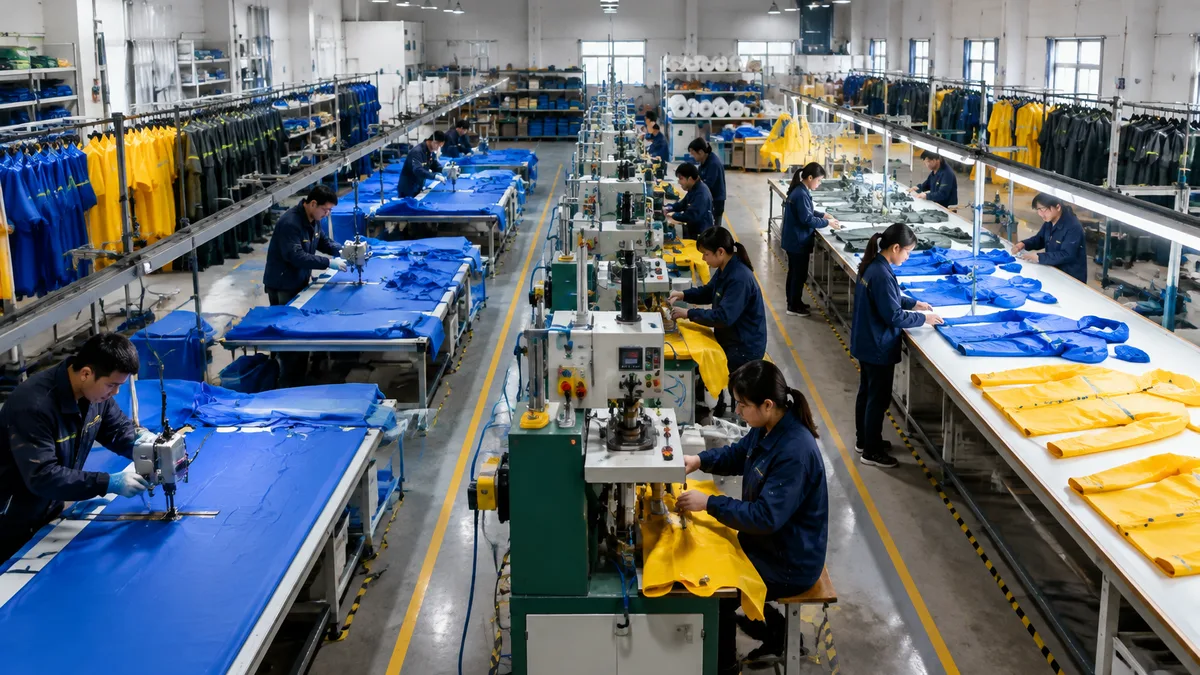
A mid-sized factory-direct rain gear manufacturer typically operates 1,500-3,000 square meters of production space with multiple dedicated lines producing one to two million pieces annually across raincoats, ponchos, waders, and rain suits. That scale matters, but what matters more is the span of control. Factory-direct suppliers source PVC, EVA, PE, and polyester fabrics directly from material mills, which means they can lock pricing for a season, verify material test reports before production begins, and swap to an alternate supplier if a batch fails waterproofness testing without waiting for a trading company to coordinate the change.
When a buyer requests a custom Pantone match, a factory-direct manufacturer can work directly with the film extruder to adjust the masterbatch ratio and typically produce a lab-dip sample within five to seven business days. A buyer working through a broker would have waited two weeks for the request to travel up the chain, and the factory might have declined the customization altogether if the order size did not justify the setup cost.
Supply Chain Transparency
Vertical integration also removes the information asymmetry that plagues brokered supply chains. A trading company does not always disclose which factory will produce your order, and it has little incentive to reveal when that factory is overbooked, when it substitutes a cheaper zipper brand to protect its margin, or when it splits your order across two facilities to meet a deadline. A factory-direct manufacturer assigns each order to a specific production line based on current capacity and product type. Because the factory controls the floor, it can tell a buyer on day fifteen that seam sealing is running ahead of schedule, or that a quality checkpoint flagged a batch of defective snaps and replacements have already been reordered. That visibility is not a customer service feature; it is a structural byproduct of owning the production process.
The Real Cost Structure Behind Factory-Direct Pricing
When a buyer compares a factory-direct quote to a broker's quote, factory-direct pricing typically ranges 12-25% below broker quotes, though the exact spread depends on product complexity, order volume, and the broker's margin structure. Buyers should benchmark multiple quotes to verify savings. That spread represents the margin a trading company or import agent extracts for coordination, credit risk, and English-language communication. Factory-direct pricing is not arbitrary. It reflects real factory economics: raw material yield, labor minutes per piece, machine setup time, mold and die amortization, and the cost of compliance testing when a buyer requests CE or EN 343 certification.
Industry cost structures for mid-volume EVA rain poncho orders typically break down as follows: materials 40-50%, labor and machine time 25-35%, QC and export documentation 8-12%, with the remainder covering overhead and margin. Actual costs vary by product complexity and order volume. Material accounts for the largest share because EVA film, though less expensive than coated nylon, must be ordered in minimum roll quantities and any unused meterage from a custom color run represents sunk cost. Labor and machine time make up the next largest portion, with heat-sealing operations consuming more time than die-cutting. Quality control, packaging, and export documentation add the next tier. A buyer who pushes for prices below material and labor cost is asking the factory to subsidize their order. That relationship will not survive the first quality dispute.
Volume-tier pricing is not a sales tactic—it is a reflection of how fixed costs distribute across production runs. When a factory sets up a production line to manufacture a custom-design wader, it programs the cutting machine, configures the seam-sealing wheel, prepares the printing screen if the design includes a logo, and runs a first-article inspection to confirm that the pattern matches the approved sample. Those setup activities cost the same whether the factory produces five hundred pieces or five thousand pieces, so the per-unit cost drops as volume increases. A buyer who orders three thousand units and then reorders another two thousand three months later pays more per piece than a buyer who commits to five thousand units up front, because the factory must repeat the setup cost twice instead of amortizing it once.
Operational Advantages That Outlast Any Price Negotiation
Sample Development Cycle Time
The procurement case for factory-direct sourcing extends well beyond the purchase order. A factory-direct supplier can iterate a sample design in three to five business days because the pattern maker, the sewing supervisor, and the quality inspector all report to the same production manager. A buyer who requests a design change—moving a reflective strip two centimeters lower, switching from a snap closure to a Velcro fastener, or adding an underarm grommet for ventilation—receives a revised sample within the same week, and if that change affects the material cost or sewing time, the factory can re-quote immediately because it knows its own cost structure. A trading company must send that request back to the factory, wait for a response, translate any technical objections, and coordinate a new sample shipment. That cycle adds seven to fourteen days to the development timeline, and in seasonal categories like rain gear, two weeks can determine whether a buyer's inventory arrives before or after the peak selling period.
Lead Time Consistency
Lead time variability is another hidden cost that direct sourcing eliminates. When a factory-direct manufacturer commits to a forty-five-day production lead time after sample approval, that estimate is based on its current production schedule, its raw material inventory levels, and its historical cycle time for that product category. It does not need to add a coordination buffer to account for a broker's internal approval process or a subcontractor's competing orders. In factory-direct arrangements, buyers often report lead time variability improvements from double-digit day ranges to single-digit ranges, which can enable safety stock reductions of 15-20 percent. That improvement does not come from faster production; it comes from eliminating the communication and coordination delays that brokers introduce into every transaction.
Inventory Visibility
Factory-direct manufacturers often maintain raw material stock for high-volume products like disposable PE ponchos and standard PVC raincoats, which means a buyer placing a repeat order can often skip the material procurement window and move directly into production. A trading company cannot offer that visibility because it does not own the inventory; it must query the factory, wait for a stock report, and relay that information back to the buyer, often with a buffer added to avoid over-promising. Factory-direct suppliers with raw material inventory can often confirm availability within hours rather than days, enabling faster response to urgent reorders. Production lead times for in-stock materials typically range from 30 to 45 days. The alternative—sourcing through a broker—would add at least one week to that timeline.
How to Evaluate Factory-Direct Suppliers for Your Rain Gear Program
Switching from brokered to factory-direct sourcing requires due diligence beyond comparing quotes. Use these evaluation criteria to separate genuine manufacturers from trading companies that claim factory ownership.
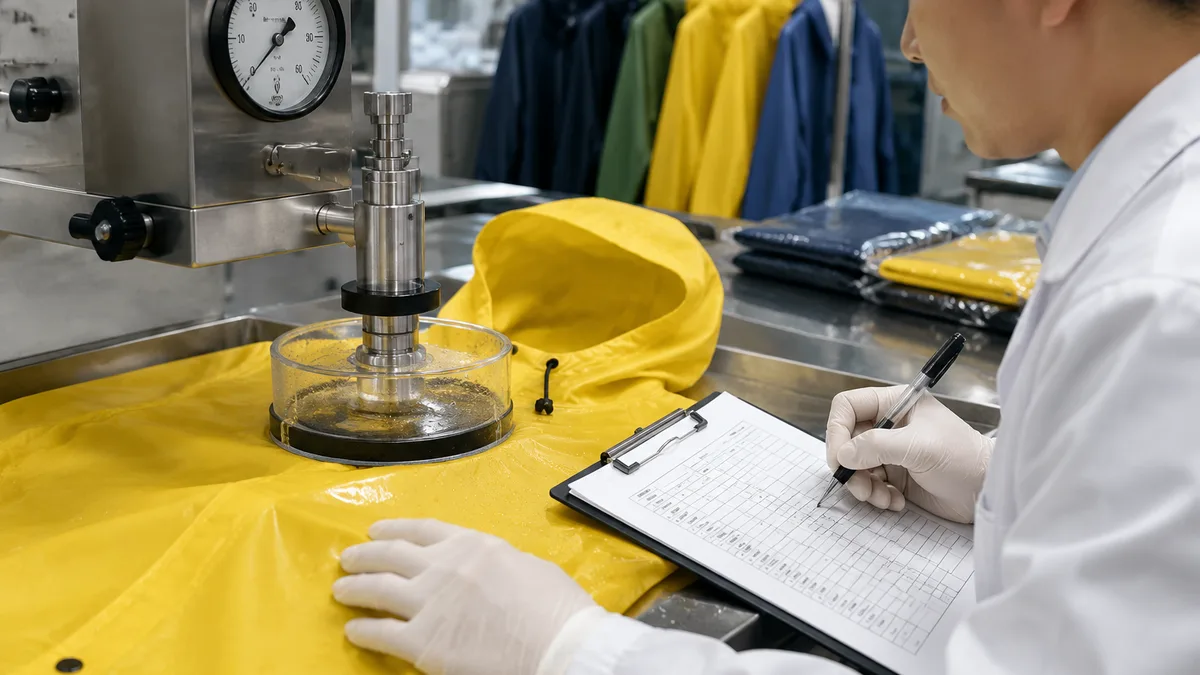
Verify facility ownership. Request a video walkthrough showing the production floor with your company name and the current date visible, or schedule an on-site audit. A genuine factory will show you dedicated production lines, raw material storage areas, and quality control stations. A trading company will deflect or offer a generic facility tour.
Test the sample iteration process. Request a design modification that requires production input—changing a seam placement, adjusting a pattern dimension, or substituting a closure type. A factory-direct supplier will respond within days with a revised sample and a clear explanation of any cost impact. A broker will take a week or more as the request travels up the chain.
References
Woven Fabric Roll. Factory-Direct vs Middleman Sourcing: A Supply Chain Comparison.
Sourcing Nova. Manufacturer vs Trading Company vs Purchasing Agent: 12 Differences You Must Know in 2022.
Investopedia. Vertical Integration: Understanding Its Impact on Business Efficiency.
Frequently Asked Questions
Practical answers related to this article.
What does 'factory-direct' mean for B2B rain gear buyers beyond lower prices?
Factory-direct sourcing means the supplier controls raw material procurement, operates its own production lines, performs in-house quality inspection, and manages export documentation without outsourcing. This integration delivers structural advantages such as lead time consistency, faster design iteration, inventory transparency, and defect accountability—not just lower unit prices.
How does factory-direct sourcing affect design iteration speed compared to brokered supply chains?
A factory-direct manufacturer can produce a revised lab-dip sample within five to seven business days for a custom Pantone match, as it works directly with the film extruder. In contrast, a buyer through a broker may wait two weeks, and the factory might decline customization if the order size doesn’t justify setup costs.
What is the typical price difference between factory-direct and broker quotes for rain gear?
Factory-direct pricing typically ranges 12-25% below broker quotes, depending on product complexity, order volume, and the broker’s margin structure. This spread reflects the trading company’s margin for coordination, credit risk, and communication services.
Why does volume-tier pricing exist in factory-direct sourcing?
Volume-tier pricing reflects how fixed costs—such as machine setup, mold amortization, and first-article inspections—are distributed across production runs. Setting up a line for a custom wader costs the same whether producing 500 or 5,000 pieces, so per-unit cost decreases with higher volume.
How does vertical integration improve supply chain transparency?
Vertical integration removes information asymmetry because a factory-direct manufacturer assigns each order to a specific production line and can share real-time updates—like seam sealing progress or defective parts detected during QC—without intermediaries. Trading companies often withhold details about which factory produces an order or when substitutions occur.
What evaluation criteria should buyers use to distinguish genuine factory-direct suppliers from trading companies?
Buyers should verify facility ownership by requesting a video walkthrough showing the production floor with the company name and date visible, or schedule an on-site audit. They should also test the sample iteration process by requesting a design change requiring production input; a genuine factory responds within days with a revised sample and clear cost impact, while a broker takes a week or more.