
How Breathable Should a Rain Poncho Be for Electric Scooter Commuters? MVTR Standards Explained
Electric scooter riders face unique comfort challenges during rainy commutes. This guide explains MVTR breathability standards, compares PVC, EVA, and breathable polyester materials, and helps OEM buyers match fabric performance to market segments—from budget urban commuters to premium year-round riders.
What Breathability Means for Electric Scooter Poncho Users
TianCiGear, you have spent three decades producing rain ponchos for every application, from single-use event giveaways to industrial-grade workwear. In recent years, your OEM clients in Europe and North America have increasingly requested breathable rain ponchos designed specifically for electric scooter commuters. These buyers recognize that riders face a different comfort challenge than pedestrians: even a ten-minute ride generates body heat and perspiration that standard PVC or EVA ponchos trap inside, creating a clammy microclimate that rivals the discomfort of getting wet from rain.
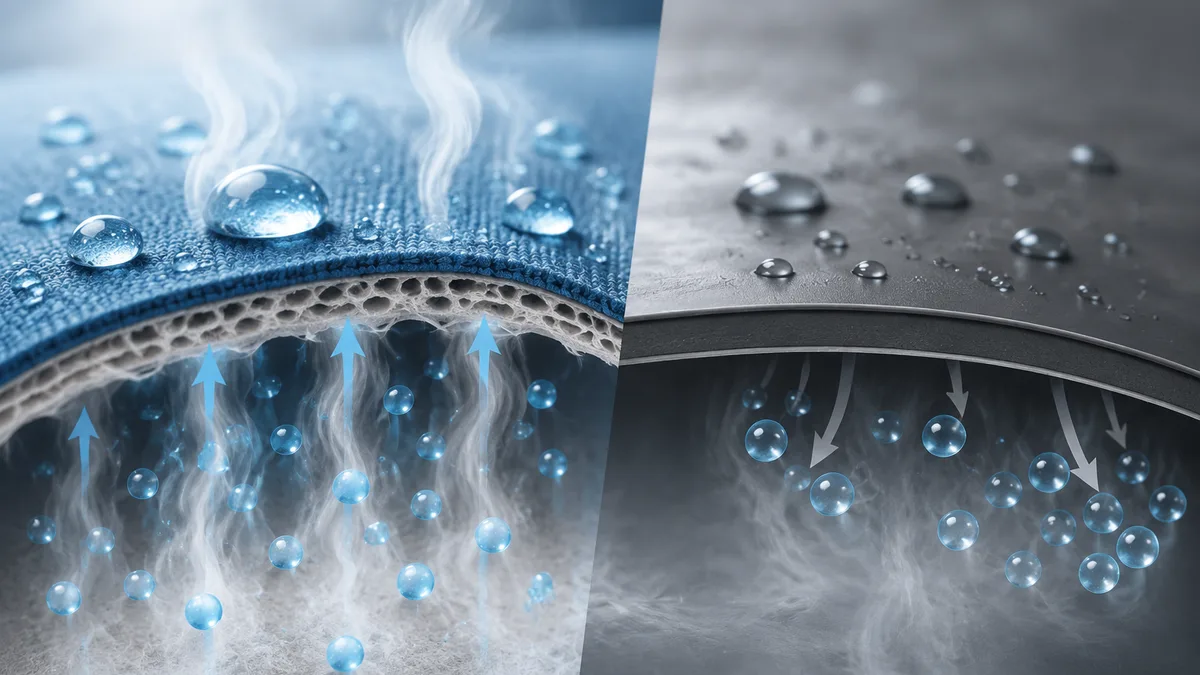
Breathability in rain gear refers to a fabric's ability to allow water vapor—primarily perspiration—to escape from inside the garment while blocking liquid water from entering. This property is quantified as Moisture Vapor Transmission Rate, or MVTR, measured in grams of water vapor transmitted per square meter of fabric per 24 hours (g/m²/24h). A higher MVTR indicates better breathability. For electric scooter riders, breathability directly affects ride comfort, particularly during commutes longer than 20 minutes, in ambient temperatures above 18°C, or when carrying cargo that increases exertion.
Your factory already produces EVA ponchos with MVTR values around 500 g/m²/24h, which offer modest vapor permeability compared to zero-breathability PVC. However, clients targeting premium commuter segments now ask for polyester fabrics with breathable coatings that deliver MVTR values between 3,000 and 8,000 g/m²/24h. Understanding when this performance leap justifies a 40-60% unit cost increase requires translating laboratory MVTR numbers into real-world rider experience and aligning material selection with target market expectations.
MVTR Standards and Measurement Methods: ISO 11092 and EN 343
MVTR is not a single universal number. Different test methods produce different results, and buyers who reference MVTR values without specifying the test standard may create confusion during sample approval. The two most commonly cited standards in the rain gear industry are ISO 11092 and the breathability component of EN 343.
ISO 11092, titled "Textiles — Physiological effects — Measurement of thermal and water-vapour resistance under steady-state conditions (sweating guarded-hotplate test)," uses a heated, porous metal plate that simulates human skin. The plate is covered with the test fabric and maintained at a constant temperature while a controlled amount of water is supplied to the plate surface. The apparatus measures the energy required to evaporate water through the fabric. The result is expressed as water vapor resistance (Ret) in square meters pascals per watt (m²·Pa/W), where lower Ret values indicate better breathability. Many manufacturers then convert Ret to MVTR for easier comparison, though the conversion introduces some variability depending on test conditions.
EN 343, the European standard for protective clothing against rain, includes a breathability classification system. Class 1 requires Ret ≤ 40 m²·Pa/W, Class 2 requires Ret ≤ 25 m²·Pa/W, and Class 3 requires Ret ≤ 15 m²·Pa/W. For reference, Ret = 25 m²·Pa/W corresponds approximately to MVTR of 3,000 g/m²/24h under typical conversion assumptions, though exact equivalence depends on temperature and humidity during testing. Your factory's EN 343 compliance documentation uses accredited third-party labs that follow the full ISO 11092 protocol, ensuring that MVTR claims can withstand buyer audits.
Another method, ASTM E96 (the upright cup method), is occasionally referenced in North American markets. This test places a fabric sample over a cup containing water or desiccant and measures the rate of moisture transmission by weighing the cup over time. ASTM E96 results can differ significantly from ISO 11092 results for the same fabric due to differences in air flow, temperature gradient, and test duration. When your OEM clients specify MVTR requirements, you should confirm which test method they expect and, if necessary, request that they accept ISO 11092 data, which your quality control lab already generates for EN 343 certification.
Material MVTR Comparison: PVC, EVA, and Breathable Coated Fabrics
Your current product portfolio spans three material families, each with distinct MVTR performance. Solid PVC film, which you use for heavy-duty industrial rain suits and budget ponchos, is completely impermeable to water vapor. MVTR for uncoated PVC is effectively zero. This material excels in waterproofness—hydrostatic head values exceed 10,000 mm—and durability, with a service life of 3 to 5 years under regular use. However, any moisture generated inside a PVC poncho remains trapped, condensing on the interior surface and wetting the rider's clothing.
EVA (ethylene-vinyl acetate) film, your most popular material for lightweight event and commuter ponchos, offers slight vapor permeability. Industry testing shows EVA MVTR in the range of 300 to 500 g/m²/24h, depending on gauge and plasticizer content. This modest breathability reduces interior condensation compared to PVC, but it remains insufficient for riders who generate significant perspiration. EVA ponchos perform adequately for short trips—under 20 minutes—in cool or moderate weather. Beyond that threshold, riders report the same clammy discomfort they experience with PVC.
Breathable polyester with hydrophilic or microporous coatings represents the performance tier that premium commuter brands request. Polyester fabrics coated with polyurethane (PU) or similar hydrophilic polymers achieve MVTR values between 3,000 and 8,000 g/m²/24h while maintaining waterproof ratings of 5,000 to 10,000 mm hydrostatic head. Hydrophilic coatings absorb water vapor molecules on the interior side, transport them through the polymer matrix, and release them on the exterior. Microporous coatings, by contrast, contain billions of tiny pores per square centimeter, each small enough to block liquid water droplets but large enough to allow vapor molecules to pass.
Your production line can handle both coating types, though microporous coatings require more precise quality control because any contamination or mechanical damage can compromise waterproofness. Hydrophilic PU coatings are more forgiving and remain the standard choice for OEM commuter ponchos. However, PU coatings are subject to hydrolysis—gradual breakdown in humid storage conditions—which limits shelf life to approximately 3 to 5 years. Buyers targeting retail channels with slower inventory turnover should be informed of this trade-off.
| Material | Typical MVTR (g/m²/24h) | Waterproof Rating (mm) | Cost per Unit (USD, FOB) | Service Life (years) | Best Application |
|---|---|---|---|---|---|
| Solid PVC | ~0 | 10,000+ | $3.00–4.50 | 3–5 | Budget ponchos, industrial use, short rides |
| EVA film | 300–500 | 2,000–3,000 | $3.50–5.00 | 2–3 | Short urban commutes, event giveaways |
| Breathable polyester (PU-coated) | 3,000–5,000 | 5,000–8,000 | $8.00–12.00 | 3–5 | Rides over 30 minutes, warm weather, premium lines |
| Breathable polyester (high-end) | 6,000–8,000 | 8,000–10,000 | $12.00–15.00 | 3–5 | High-exertion use, year-round commuting |
When Breathability Matters: Ride Duration, Temperature, and Exertion
Your OEM clients often ask whether the cost premium for breathable fabrics is justified. The answer depends on three variables: ride duration, ambient temperature, and rider exertion level. Field data collected from your European distributors and end-user surveys provide practical benchmarks.
For rides under 20 minutes in temperatures below 15°C, standard EVA ponchos deliver acceptable comfort. Riders generate limited perspiration during short trips, and cool ambient air keeps the interior microclimate tolerable even without vapor transmission. In this scenario, the additional cost of breathable polyester offers minimal perceived benefit, and most buyers prioritize low unit cost to remain competitive in price-sensitive urban markets.
Once ride duration exceeds 30 minutes, or ambient temperature rises above 18°C, breathability becomes a measurable comfort factor. A 30-minute ride at moderate speed (15–20 km/h) on flat terrain generates approximately 150 to 250 mL of perspiration, depending on rider metabolism and clothing layers. If trapped inside a zero-breathability poncho, this moisture condenses on the interior surface and wets the rider's shirt and trousers. Riders frequently report that they arrive at their destination feeling as damp as they would have without rain protection. Breathable fabrics with MVTR 3,000–5,000 g/m²/24h can transmit 75 to 125 grams of vapor per square meter over a 30-minute ride, reducing interior condensation by an estimated 40 to 60%. While this does not eliminate dampness entirely, it moves the experience from "uncomfortably wet" to "slightly clammy," which riders in end-user surveys describe as a meaningful improvement.
Exertion level amplifies the breathability requirement. Riders ascending hills, carrying cargo, or operating heavier electric scooters generate perspiration rates 50 to 100% higher than riders on flat terrain with no load. In warm-climate markets—Southeast Asia, Southern Europe, parts of the Middle East—ambient temperatures during the rainy season often exceed 25°C, and even short rides produce significant perspiration. Your distributors in these regions report that breathable ponchos command a 30 to 40% price premium at retail and enjoy higher repeat-purchase rates, suggesting strong consumer preference once riders experience the comfort difference.
Cost and Trade-Off Analysis: Standard EVA vs Breathable Polyester
Your factory's FOB pricing reflects the material and production cost differences between EVA and breathable polyester ponchos. A standard EVA poncho designed for electric scooter riders—featuring extended front length, angled sleeves, and heat-sealed seams—costs $3.50 to $5.00 per unit for orders of 1,000 pieces, depending on gauge, print complexity, and packaging. Breathable polyester ponchos with PU coating and taped seams cost $8.00 to $15.00 per unit for the same order volume, a premium of 60 to 200%. Most of this cost difference comes from the fabric itself: breathable polyester costs $2.50 to $4.00 per meter compared to $0.80 to $1.20 per meter for EVA film. Seam taping, required to seal needle holes in woven polyester, adds another $0.50 to $1.00 per unit in labor and materials.
Despite the higher cost, breathable ponchos offer your OEM clients several competitive advantages. Retail prices for breathable commuter ponchos range from $25 to $45 in European and North American markets, compared to $12 to $20 for EVA ponchos. The higher retail margin allows brand owners to absorb the FOB cost increase while still improving profitability. Customer satisfaction data from your distributors shows that breathable ponchos generate 20 to 30% fewer returns and complaints related to interior dampness, reducing the hidden costs of customer service and product replacement.
For buyers targeting budget-conscious segments—students, gig-economy delivery riders, and emerging markets—standard EVA ponchos remain the rational choice. These buyers prioritize low upfront cost and are willing to tolerate some interior condensation during short rides. For buyers targeting premium commuter segments—urban professionals, subscription box services, and corporate wellness programs—breathable polyester delivers the performance differentiation that justifies higher pricing and builds brand loyalty.
Your sales team should guide OEM clients through this decision by asking three qualifying questions: What is the average commute duration of your target riders? What are the typical ambient temperatures during your primary sales season? What retail price point are you targeting? Clients whose answers point to rides over 30 minutes, temperatures above 18°C, and retail prices above $30 should strongly consider breathable polyester. Clients targeting short urban trips, cooler climates, or budget retail channels will find EVA more cost-effective.
Buyer Decision Framework: Matching Material to Market Segment
Your OEM clients represent diverse market segments, each with different performance priorities and price sensitivity. A structured decision framework helps buyers select the appropriate breathability level without over-specifying or under-specifying material performance.
Budget urban commuter segment: Riders making trips under 20 minutes in temperate or cool climates. Target retail price $12–20. Recommended material: EVA film, 0.12–0.15 mm gauge, MVTR 300–500 g/m²/24h. Acceptable interior condensation during short rides; low unit cost enables competitive retail pricing. Your factory's standard EVA poncho with heat-sealed seams and drawstring hood meets this specification at $3.50–5.00 FOB.
Premium urban commuter segment: Riders making trips 20–40 minutes in moderate climates, or shorter trips in warm weather. Target retail price $25–35. Recommended material: PU-coated polyester, 190–210 denier, MVTR 3,000–5,000 g/m²/24h, waterproof rating 5,000–8,000 mm. Reduced interior condensation, better comfort during moderate exertion. Your factory's breathable polyester poncho with taped seams and adjustable cuffs meets this specification at $8.00–12.00 FOB.
High-performance commuter segment: Riders making trips over 40 minutes, riding in hilly terrain, or operating in warm humid climates. Target retail price $35–50. Recommended material: high-end PU-coated or microporous polyester, 210–300 denier, MVTR 6,000–8,000 g/m²/24h, waterproof rating 8,000–10,000 mm. Minimized interior condensation, suitable for year-round use. Your factory can source this fabric tier and produce ponchos at $12.00–15.00 FOB, though MOQ may increase to 500–800 pieces per colorway due to fabric minimum order requirements.
References
International Organization for Standardization. ISO 11092:2026 - Textiles — Physiological effects — Measurement of thermal and water-vapour resistance under steady-state conditions (sweating guarded-hotplate test).
Canvas ETC. Denier Fabric Coatings: PU Vs PVC Vs DWR Explained.
Inov-8. Waterproof & Breathability Ratings Explained.
Frequently Asked Questions
Practical answers related to this article.
What does MVTR stand for and how is it measured?
MVTR stands for Moisture Vapor Transmission Rate, measured in grams of water vapor transmitted per square meter of fabric per 24 hours (g/m²/24h). A higher MVTR indicates better breathability.
What are the main MVTR standards used in the rain gear industry?
The two most commonly cited standards are ISO 11092, which measures water vapor resistance (Ret) in m²·Pa/W, and EN 343, which classifies breathability with Class 1 (Ret ≤ 40), Class 2 (Ret ≤ 25), and Class 3 (Ret ≤ 15).
What MVTR range do breathable polyester ponchos typically achieve?
Breathable polyester ponchos with PU coating achieve MVTR values between 3,000 and 8,000 g/m²/24h, depending on the specific product tier.
How does the breathability of EVA compare to PVC and breathable polyester?
EVA film has an MVTR of 300–500 g/m²/24h, offering modest vapor permeability. In contrast, solid PVC has effectively zero MVTR, while breathable polyester delivers 3,000–8,000 g/m²/24h.
When is breathability most important for electric scooter riders?
Breathability becomes a measurable comfort factor when ride duration exceeds 30 minutes, ambient temperature is above 18°C, or rider exertion is high due to hills, cargo, or heavier scooters.
What cost premium does breathable polyester add compared to EVA?
Breathable polyester ponchos cost $8.00–$15.00 per unit FOB, compared to $3.50–$5.00 for EVA, representing a 60–200% unit cost increase.